Introduction to UV Printing Principles
Introduction to UV Printing Principles
This document provides a brief overview of UV printer printing, curing, and color principles, as well as the unique features of our printer. First, we'll explain the difference between traditional printing and UV printing.
Comparison Table: Traditional Printing vs. UV Printing
|
Feature |
Traditional Printing |
UV Printing |
|
Process |
Uses solvent-based or water-based inks, requiring multiple passes and drying time. |
Uses UV-curable inks, cured instantly in a single pass. |
|
Substrates |
Primarily suitable for paper and cardboard.
|
Suitable for a wide range of substrates: metal, plastic, ceramic, glass, wood, etc. |
|
Print Quality |
Rich color reproduction, but performance is poorer on transparent materials. |
High resolution and clarity. Produces clear and realistic images even on transparent PET materials. |
|
Environmental |
Traditional inks may contain volatile organic compounds (VOCs), impacting the environment. |
UV inks are free of harmful volatile organic compounds (VOCs), making them environmentally friendly. |
|
Print Speed |
Slower, approximately 10+ square meters per hour. |
Faster, approximately several tens of square meters per hour. (tens of square meters) |
|
Cost |
Printers and inks are relatively inexpensive. |
Printers and UV inks are more expensive. |
Printing Principle
UV printers utilize piezoelectric inkjet technology. This means there's no direct contact with the material's surface. Instead, the print head uses voltage to precisely eject ink droplets from the nozzles onto the substrate. This "non-contact" or "gap" inkjet method allows for printing on a vast range of materials. A single machine can print on materials like glass, tile, acrylic, metal, leather, and more.


Curing Principle
UV curing occurs when the photoinitiators in the UV ink react with the ultraviolet light emitted by the LED lamps. This chemical reaction causes the ink to solidify almost instantly, not through traditional heat baking or air drying. This rapid curing process, taking only a few seconds, significantly reduces production time. Because UV ink itself often has a matte finish, printed images can sometimes appear slightly dull. To address this, a clear varnish (gloss) can be applied over the printed image to create a brighter, high-gloss effect.

Color Principle
A 5-color UV printer (C - Cyan, M - Magenta, Y - Yellow, K - Black, W - White) meets most standard printing needs.
G - Gloss (varnish) is also available to enhance the visual and tactile effect.
Additional colors are created by mixing these base inks using color management software.
Beyond standard color printing, the printer can also achieve special effects through software control. For example, layering W (white) or gloss builds raised, textured surfaces and creates embossed (relief) effects.


Special Features
ColorMaestro™ Technology: Create Up to 5 mm of 3D Texture
Modern printing technology is increasingly focused on the fee of the print. The E1 achieves superior 3D relief printing for enhanced dimensionality and texture. This is accomplished through a combination of software and hardware. First, the software uses AI to convert the user's original print image into a depth map. The user sets the desired print height, and the software automatically determines the number of layers and color mapping required. The hardware then performs layered printing, building up the 3D effect by precisely depositing layers of white ink or gloss, achieving a relief effect of up to 5mm.

3-in-1 Modular Design for All Your Printing Projects
This device supports multiple attachments, including flatbed printing, rotary printing, and roll-to-roll printing ( under development). This allows you to print on a variety of sizes and types of objects with a single machine.

JetClean™ System: Reduces Clogs Automatically
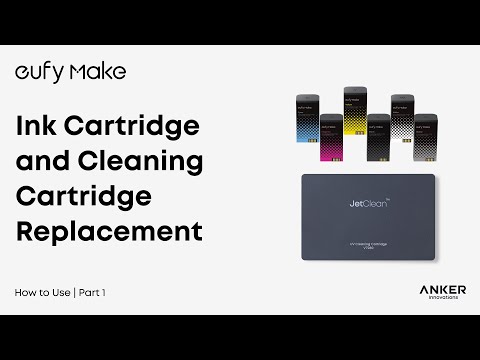
Because conventional UV printer nozzles are prone to problems and require frequent maintenance, the E1 is equipped with JetClean™ automatic nozzle cleaning and maintenance technology. This system automatically infuses cleaning solution and moisturizing solution into the nozzles after use, keeping them clean and moist even when the printer is idle. This automated process ensures optimal nozzle performance and reduces manual maintenance.

Precise Auto-Positioning with Dual Lasers and a Built-In Camera
To accurately identify the target print area and measure object height for precise design and printing, the E1 is equipped with a high-resolution camera and dual laser sensors.
The built-in camera captures images of the object, while the dual lasers measure height, making it easy for users to locate and align the desired printing area.
In addition, automatic distortion correction and advanced calibration algorithms are integrated to enhance precision, enabling truly intelligent, high-accuracy printing.